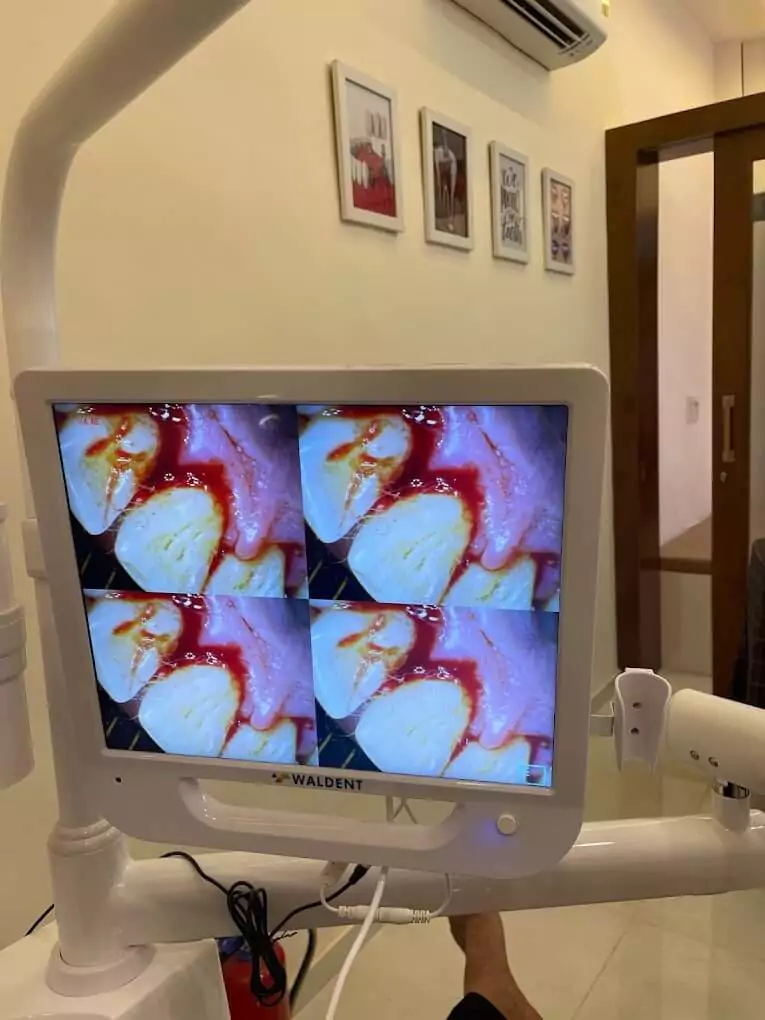
A lot of dental problems simply aren't visible to the naked eye. Decay between teeth, infection at the root of a tooth, or bone loss beneath the gumline can all be present without any obvious signs — an X-ray lets your dentist catch these issues early, often before they cause pain.
Bitewing X-rays capture the crowns of upper and lower teeth to check for decay between them. Periapical X-rays show the entire tooth, from crown to root, useful for spotting infections or bone changes. Panoramic X-rays capture the whole mouth in a single image, helpful for planning treatments like implants, wisdom teeth removal or braces.
Modern dental X-ray equipment uses very low radiation doses, and digital X-rays (which most clinics, including ours, now use) reduce this even further compared to older film-based methods. For context, the radiation from a routine dental X-ray is a small fraction of what you're exposed to during a long flight.
This depends on your oral health history and risk factors. Patients with a history of cavities or gum disease may need X-rays more frequently, while those with good oral health might only need them every couple of years. Your dentist will recommend a schedule based on your specific case.
Beyond spotting cavities, X-rays are essential for planning procedures like root canals, implants and orthodontic treatment — giving us a clear picture of bone structure, root position and alignment before we ever begin treatment.
Due for a check-up? Book an appointment and we'll assess whether an X-ray is needed as part of your visit.
Book a ConsultationKeep Reading
Missing teeth can be more than a cosmetic concern — they can affect eating, speech and confidence. Here's what to know before choosing implants.
Read MoreThe mere mention of root canals can make many people uneasy, largely due to enduring myths about pain and cost. Let's separate fact from fiction.
Read MoreTalk to our dental expert on call or WhatsApp us for quick assistance.